A collaborative speaker series brought to you by:


Series
Anekāntavāda: Theory and Praxis
Sep 01, 2026
9:00 - 10:00 AM PDT
Presenter: Jinesh Sheth, Researcher, University of Birmingham, UK
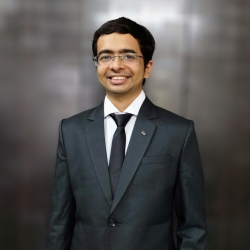
Dr. Jinesh Sheth is currently the Dharmanath Postdoctoral Research Fellow in Jain Studies at the Department of Philosophy, University of Birmingham, UK. He is also a Project-Member of the ‘Global Philosophy of Religion’ Project at University of Birmingham. He holds a BA degree in Sanskrit and an MA in Philosophy. He completed his PhD from University of Mumbai in 2024. His current research explores how keen the Jain philosophers are in maintaining the non-one-sided position when it comes to problems related to epistemology, ethics and soteriology. He is also working on his first book project that is provisionally titled as “Anekāntavāda: The Jaina Theory of Non-one-sidedness (Philosophy, Exegesis, Praxis and Debates).”
Anekāntavāda: Theory and Praxis
In this talk, I reflect on the theory of anekāntavāda (non-one-sidedness) with a particular focus on its praxis. First, through textual exegesis and philosophical analysis, I highlight some of the gaps that exist between the texts and the contemporary understanding of anekāntavāda. This includes some reflections on what makes a perspective true, and more importantly, what makes it false. I then make an argument that anekāntavāda is a concept and not a precept. I do not wish to claim that one cannot derive precepts from a concept. In the rest of the talk, I explain what this argument entails and then elaborate on ways in which anekāntavāda can act as a guiding principle in different contexts. This also includes drawing attention to the theory of perspectives (nayavāda), especially the two-truths theory (niścaya-vyavahāra nayas) in the Jaina context and reflect on how nayas play a role in what many seekers are interested in: "day-to-day life". I conclude by drawing attention to a quality that a true anekāntavādin must possess and which has been alluded to by Jain philosophers across centuries—be(com)ing a 'connoisseur of perspectives' (naya-viśārada).