A collaborative speaker series brought to you by:


Series
Practicing Anekāntavāda in Times of Crisis: Public Dialogue, Health, and Vaccine Hesitancy
May 04, 2026
9:00 - 10:00 AM PDT
Watch the Replay

Presenter: Ana Laura Funes Maderey, Assistant Professor, Fairfield University
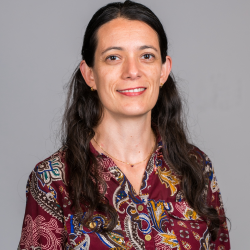
Ana Laura Funes Maderey is Assistant Professor of Philosophy at Fairfield University where she teaches Asian Philosophies and East-West Comparative topics in Philosophy. Her research seeks to establish dialogues between phenomenology, feminism, and notions of bodily self-awareness in the Indian philosophical traditions of Sāṃkhya, Yoga, Vedānta Advaita, and Jainism. She co-edited with Christopher Chapple the book Thinking with the Yoga Sūtra: Translation, Interpretation, and has published several articles on Sāṃkhya-Yoga philosophy in specialized journals. She is currently writing a manuscript on the ethical dimension of prāṇa in the history of Indian philosophy and its implications for an intercultural philosophy of breathing.
Practicing Anekāntavāda in Times of Crisis: Public Dialogue, Health, and Vaccine Hesitancy
Public dialogue about issues that matter most to us, personally, politically, and professionally, often breaks down when people feel vulnerable in the face of others’ decisions. This was especially evident during the COVID-19 pandemic, when disagreements over vaccination generated fear, anger, and moral polarization. Vaccine-hesitant individuals were frequently dismissed as irrational or unethical, leaving little room for genuine dialogue or mutual understanding. In this talk, I draw on my own attempt to apply anekāntavāda to debates surrounding vaccine hesitancy to show how this framework encourages epistemic humility, attentiveness to multiple perspectives, and ethical commitment, even when mutual agreement seems impossible. Rather than resolving disagreements by forcing consensus, anekāntavāda helps cultivate the conditions for civil and authentic social dialogue in a way that addresses the concerns that everyone has to keep themselves and their communities safe during emergencies such as the one caused by the COVID-19 pandemic.