A collaborative speaker series brought to you by:

Series
How We Are What We Are: Anekāntavāda and the Clustered Nature of Identity
Oct 09, 2026
11:00 - 12:00 PM PDT
Presenter: Melanie Barbato, Lecturer, RWTH Aachen University
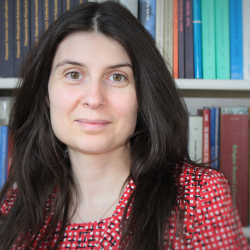
Melanie Barbato is the author of Jain Approaches to Plurality: Identity as Dialogue (Brill) and the editor of Interreligious Dialogue and Diplomacy, a special issue of Cross Currents (UNC Press). She is a lecturer at RWTH Aachen University, Germany, and coordinates the Network of Hinduism in Dialogue at the Oxford Centre for Hindu Studies, UK.
How We Are What We Are: Anekāntavāda and the Clustered Nature of Identity
Anekāntavāda can be an analytical tool for understanding the nature of reality in general. Today, we will place the focus on understanding ourselves. The groups we belong to are often talked about as if they are monolithic: the Jains, the Christians, the Buddhists. But if we look inward and to those around us, we notice that humans and the groups that they form are complex and sometimes apparently full of contradictions. Perry Schmidt-Leukel has in his fractal theory of religion developed the idea that the differences that can be found between groups can typically also be found within a group, effectively producing a fractal structure in which similar patterns replicate on different levels. This theory can be brought into conversation with anekāntavāda as the principle of the many-sidedness of reality. The implications of such structural considerations can be surprisingly practical: For example, they can help us to draw more diverse participant lists for dialogue events, or they can help us understand the role conflicts and moral tensions that we sometimes face in everyday life.